
The Zecomy Knowledge Hub
Waste Assessment: A Framework to Drive Action — Not Just Reports
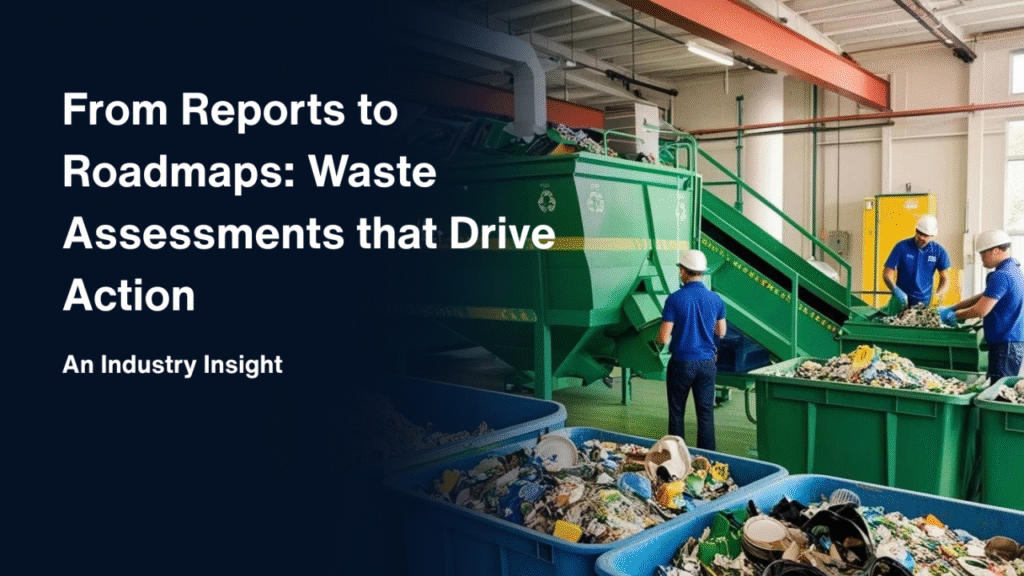
How to Conduct a Waste Assessment That Drives Action — Not Just Reports
In India’s industrial landscape, a Waste Assessment is no longer just a compliance ritual — it is an opportunity to unlock hidden value and accelerate ESG performance. Yet in many organizations, waste assessments end up as static reports created for regulators rather than tools that guide real decision-making.
A modern Waste Assessment should work as both a diagnostic and an implementation-oriented roadmap — reducing disposal costs, recovering valuable materials, and improving sustainability outcomes across the value chain.
A Six-Step Framework for Actionable Waste Assessments
1. Define Objectives Beyond Compliance
Traditional audits focus only on documentation. An impactful Waste Assessment starts with broader goals:
Mapping waste across the full value chain
Identifying opportunities for reuse, recovery, or monetization
Ensuring insights directly inform operational decisions
2. Map Waste Streams Accurately
Accuracy is the foundation for every waste strategy. This includes:
Characterization — hazardous, non-hazardous, e-waste, batteries, biomedical, construction debris, etc.
Quantification — measuring actual volumes over time rather than estimates
Material Flow Analysis — tracing inputs, outputs and leakages to uncover avoidable waste
Digital tools are now enabling industries to capture waste data in real time, improving transparency and traceability.
3. Identify Recovery & Circularity Opportunities
A strong Waste Assessment goes beyond disposal by highlighting:
Material recovery (metals from machining scrap, solvents from process streams)
Energy recovery (refuse-derived fuel from non-recyclables)
Process redesign to minimize waste at source
4. Integrate ESG & Cost Metrics
Waste assessments gain organizational traction when aligned with financial and sustainability outcomes:
Compare disposal cost vs. diversion savings
Measure GHG emission reductions (GRI 306, BRSR Sr 4, ESRS E5)
Map alignment with UN Sustainable Development Goals
Example: diverting one tonne of mixed paper from landfill to recycling avoids ~2.6 tonnes CO₂e emissions while saving ₹1,500–₹3,000 in disposal charges.
5. Convert Insights Into an Implementation Plan
Insights only create impact when paired with execution. A practical roadmap includes:
Stream-specific actions for reduction and recovery
Accountability, milestones and timelines
KPIs such as diversion rate, circularity index, cost savings and CO₂e avoided
6. Commit to Continuous Improvement
Waste management is dynamic, not static. A future-ready framework involves:
Regular data updates and assurance
Monitoring the impact of interventions
Integrating new technologies and market linkages
Applying a PDCA (Plan-Do-Check-Act) governance loop
Why This Matters Across Industries
Manufacturing, FMCG, healthcare, IT, automotive, pharma and construction sectors face increasing pressures:
Tighter regulatory norms for hazardous, plastic, e-waste and batteries
Rising penalties for improper disposal
Customer and supply-chain demands for transparency
Net-zero and “Zero Waste to Landfill” targets
Organizations that adopt recovery-oriented Waste Assessments are better positioned to reduce risk, unlock financial value and strengthen their ESG narrative.
Conclusion: Turning Assessments Into Action
Waste Assessments should not remain static reporting documents. They must evolve into living action roadmaps that link real-time data, operational recovery, ESG metrics and continuous improvement.
Digital circular platforms like Zecomy’s ecosystem are enabling industries to bridge this action gap — helping transform waste from a cost centre into a value-generating resource.
Want to convert your Waste Assessment into real cost savings and ESG impact?
Explore Zecomy’s Industrial Waste Advisory & Recovery Services.
Frequently Asked Questions (FAQs)
1. What is a Waste Assessment?
A Waste Assessment is a structured evaluation of waste generation, composition, handling, and disposal across operations to identify reduction, recovery, and recycling opportunities.
2. Why is a Waste Assessment important for industries?
It helps industries reduce disposal costs, improve material recovery, enhance compliance, and strengthen ESG performance by aligning waste management with sustainability goals.
3. What are the key steps in conducting a Waste Assessment?
The core steps include defining objectives, mapping waste streams, analyzing material flows, identifying recovery opportunities, integrating ESG and cost metrics, developing an implementation plan, and monitoring continuous improvement.
4. How does a Waste Assessment improve ESG reporting?
A Waste Assessment supports ESG reporting by providing traceable data on waste diversion, circularity, cost savings, and GHG emission reductions aligned with frameworks such as GRI 306 and BRSR.
5. What types of waste are typically analyzed in a Waste Assessment?
Hazardous, non-hazardous, plastic waste, e-waste, batteries, metals, chemical solvents, biomedical waste, and construction debris are commonly evaluated.
6. How often should a Waste Assessment be conducted?
Most industries conduct a Waste Assessment annually or during process or facility expansions. Digitally monitored facilities may opt for real-time or quarterly tracking.
7. Can a Waste Assessment help reduce operational costs?
Yes. Recovering materials, preventing leakages, redesigning processes, and optimizing disposal methods can significantly lower waste management costs.
8. Who should perform a Waste Assessment?
It is best conducted by trained sustainability experts or waste management specialists with experience in sampling, material flow analysis, regulatory compliance, and circularity solutions.
9. What tools or technologies can support Waste Assessments?
Digital waste tracking tools, material flow software, IoT-based monitoring systems, and circular marketplace platforms help improve accuracy and transparency.
10. How is a Waste Assessment different from a compliance audit?
Compliance audits focus on meeting regulatory reporting requirements, while Waste Assessments emphasize actionable recovery, process improvement, ESG gains, and financial value creation.
Slide 1 Title
Slide 1 Sub Title
Slider 1 Description Text, Lorem ipsum dolor sit amet, consectetur adipiscing elit. Curabitur laoreet cursus volutpat. Aliquam sit amet ligula et justo tincidunt laoreet non vitae lorem.
Slide 2 Title
Slide 2 Sub Title
Slider 2 Description Text, Lorem ipsum dolor sit amet, consectetur adipiscing elit. Curabitur laoreet cursus volutpat. Aliquam sit amet ligula et justo tincidunt laoreet non vitae lorem.
Slide 3 Title
Slide 3 Sub Title
Slider 3 Description Text, Lorem ipsum dolor sit amet, consectetur adipiscing elit. Curabitur laoreet cursus volutpat. Aliquam sit amet ligula et justo tincidunt laoreet non vitae lorem.